About Us

Manvadhikar Samajik Manch (MASM) is a Non-Profit Organization working towards the empowerment of marginalized and excluded sections of the society. MASM is registered under Societies Act, 1860 in the year 1997.
MASM is committed to working towards the realization of equality as enshrined in the constitution of India. MASM believes that substantive equality, looking beyond equality, can only be achieved through equity and inclusion. Several categories of citizens are denied equality in opportunities, access and results of development, due to their historical exclusion. It is manifestly clear that lop-sided development, which leaves out large sections of the population, cannot be sustainable. Human capital needs to be harnessed and nurtured, and for this, it is imperative to evolve a society and polity which consciously promotes equity and inclusion.
The process of creating a gender sensitive environment, involves taking into account the specific concerns of women and men. The prevalent patriarchal world view that dominates has to be deconstructed. This involves education and sensitization along with proactive governance to create a conducive climate for women to live with dignity and reach their full potential, there by contributing to the nation’s prosperity. 

MASM is independent of any government, political ideology, economic interest, religion or any form of ethnocentric biases. It is concerned solely with the impartial protection and promotion of Human Rights in all its forms. The organisation mobilises volunteer activists and resource persons to work untidily for a society where in every individual irrespective of caste, creed, sex, region, place of birth, belief, occupation, customs and traditions enjoys human rights; without jeopardising similar rights of fellow individuals. The MASM is a membership organization.

Members of the MASM are drawn from the public where any person or organization can apply by completing an application form. The members form the highest body of the MASM namely, the Annual General Meeting. The Governing Body is authorized to ensure policy of the organization is set and implemented. The Governing Body is accountable to the General Body and is the spokesperson of the MASM in matters of operation.

 Vision, Mission and Core Values

Vision: “A far sighted approach to a JUST and EQUITABLE society”
Misson: Our mission is to add on the achievements so realized in the umbrella of human rights to our nation and worldwide. To join hands with various individuals, organizations and countries and help in maintaining peace and joy in the world by the simple elimination of discrimination and upheaval of the various segments of the society as well as the weaker sections.
Core Values: The entire team of MASM maintains and observes the ethnicity of its fundamental values. Likewise it is very well visible in each and every member of the organization. The values are the coherent force driving its members to pursue the objectives of MASM 


Sight of Equality: The people enjoined to the organization make it a point to see everyone as equals and there stands no discrimination in respect of caste, creed, sex, race, religion and place of birth towards any of its fellow individuals.
Transparency: There lies no hidden darker shade to our working. ‘What we are’ and ‘who we are’ simply and extravagantly is foreseen as it is. No such promises are guaranteed that shall not be fulfilled.
Dedication: The team is highly dedicated to the noble cause and believes in giving all of their heart and soul for the integration of human rights for one and all. There is a fully fledged commitment.
Continuous Improvement: With the indigenous approach to meet the changing times and grow with the best possibilities our team believes in improving its ways of functioning and implementation on an everyday bases. We believe in delivering the best to the society.
Openness and Initiative: A very strong value that every person must possess in order to meet the wrong and turn it to right is to be open to the ideas and avenues and to make initiative on our own.  We let the ideas flow in order to bring about justice to all in every way and thus do not hesitate to take the first step.
Integrity and Teamwork: The people working with us maintain a strong sense of moral and ethical values. The gravity of transparency arises from the honest character of our team. The team works as a family and thus believes in brotherhood and working together to fill in the ocean.
Objectives: The broad objective of the organizations is to promote the cause of national and international integration by strengthening the efforts for recognition and implementation of human rights and to create legal and human rights awareness and empowerment among the general public through the provision of legal and civic education, provision of legal aid, conducting research and follow-up human rights violations.

The Specific Objectives of the MASM are:

  • Promote, respect and observe of human rights and democracy
  • Create networks with the public interest and human rights organization, non-governmental organizations, universities, relevant research organizations and legal associations etc.
  • Make best efforts for protection, promotion and advancement of socio-economic and political rights of the public.
  • Organise and sponsor to undertake IEC campaigns, conferences, seminars, workshops, meetings and such other activities with a view to promoting the social and educational objectives of the MASM.
  • Raising funds for the purposes of the MASM on such terms as are compatible with the autonomy of MASM and within the spirit of its social and educational objectives.
  • Work out for all out socio-economic progress of the country and the society 

Target: Every individual and every institution interested in human rights and / or affected by violation or deprivation of human rights.  Empowering the most deprived section of the society including women, tribes and caste people is the goal of our organisation.

Years of Experience: Manavadhikar Samajik Manch (MASM) is functioning since the year 1997 under the leadership of Dr Shanker Adawal. The organisation mobilises volunteer activists and resource persons to work unitedly for a society where in every individual irrespective of caste, creed, sex, region, place of birth belief occupation customs and traditions enjoys human rights without jeopardising similar rights of fellow individuals.

Research and Surveys: Manavadhikar Samajik Manch is an autonomous Research and Development Consultancy Organisation, registered under Societies Registration Act of 1860.  MASM has a sound team of experienced, eminent and young professionals with a capability to provide a wide range of research and consultancy services in wide areas including Community Development, Health Care, Women & Child Development, Human Rights, Vocational Training, Urban Development, Rural Development, Child Rights, Disability, Social Justice, Environment, Resettlement and Rehabilitation.

Services Offered by MASM: Different types of research services offered by the MASM include a wide array of studies covering the social sectors, economic development programmes, public opinion surveys, rural and agricultural markets, rehabilitation & resettlement, environment & social impact assessment, communication and other technology oriented markets, many of the work being based on population based surveys. Impact assessment studies, evaluation studies, pure research studies on topics of interest, Baseline surveys, End line Surveys, Documentation studies, opinion polls, field surveys are all forming part of our services offered. Some of the thematic areas for research services that MASM offers are as follows:

  •  Project planning and feasibility studies
  • Large-scale population and demographic surveys  
  • Baseline studies/Benchmark /End-line surveys
  • IEC Campaign Evaluations
  • Environment Impact Assessment Studies
  • Programme evaluation studies
  • Impact Assessment Studies
  • Resettlement and Rehabilitation studies
  • Beneficiary needs assessment studies
  • Training needs assessment studies
  • Knowledge, Attitude & Practices (KAP) studies
  • Performance monitoring studies
  • Concurrent evaluation studies

 Office Address of MASM

Manavadhikar Samajik Manch
39, Ground Floor & 241 Third Floor,
Sant Nagar, East of Kailash, New Delhi-110065
Email: officemail.masm@gmail.com Tel: 011-46578478/40504743

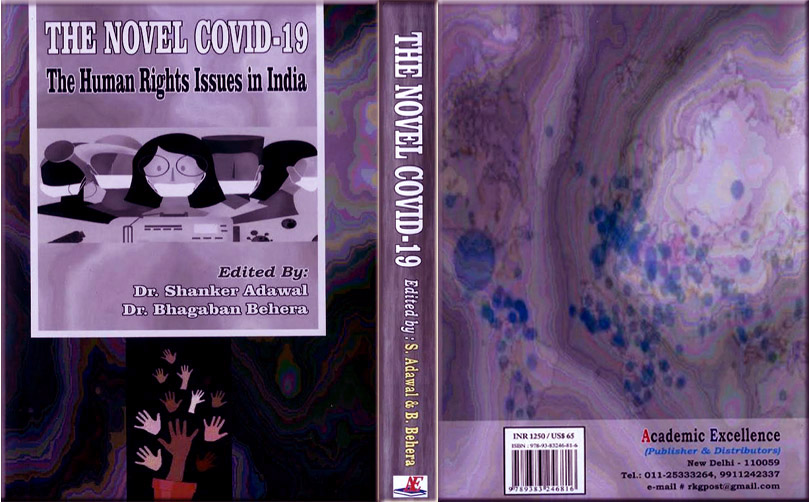
The Novel Covid-19: The Human Rights Issues in India


Covid-19 is an ongoing pandemic that has claimed an estimated 1.61 million lives and infected over 72.3 million people as of December 14, 2020. First detected in China in December 2019, Covid-19 has spread to almost all the countries and territories of the world. The world is facing an unprecedented crises. At its core is a global public health emergency on a scale not seen for a century, requiring a global response with far-reaching consequences for our economic, social and political lives. The priority is to save lives. In India, Covid-19 infected cases are rising exponentially since early August and hitting new highs every day but the fatality rate is very low compared to global average. To save human lives in the absence of any vaccine or antidote, government of India like any other countries adopted extraordinary measures like extensive lockdowns to slowdown the pace of the transmission of the virus. This in turn restricted the freedom of movement, and freedom to enjoy many other human rights. These measures inadvertently affected people’s livelihoods and security, their access to health care, to food, water, sanitation, work, education including their leisure. The Covid-19 crisis has exacerbated the vulnerability of the least protected in society. Effective measures must be taken to mitigate the unintended consequences resulted from Covid-19 restrictions. This volume has made an attempt to analyse the human rights violation of the individuals and what policy measures the government of India must take in order to address this situation. The book has been divided into four parts. Part-I provides a theoretical analysis of human rights, Part-II discusses the poor Indian economy during the Covid-19 pandemic and the vulnerability of migrant workers, Part-III elaborates the deep rooted problems of gender violence in patriarchal societies like India amid Covid-19 on Indian educational system and the adoption of e-learning by several institutions. The edited volume may be an useful guide for the human rights activists and practitioners, academicians, researchers, students, civil society activists and other luminaries.


Mainstreaming healthcare startups amidst COVID-19 is the need of the hour - dr. shanker adawal

By Dr Shanker Adawal

The COVID-19 pandemic has exposed the deep vulnerabilities and inherent gaps of India’s healthcare system. The outbreak of COVID-19 posed both a challenge and opportunity for India’s healthcare startups. Despite several inherent challenges, startups promptly engaged themselves and developed solutions for COVID-19 applications in the areas of prevention, detection, disruption management, and operational efficiency and have provided innovations in medical goods and services. The involvement of startups has helped the government to reach every household during the pandemic.

By mid-March, it became apparent the pandemic has come to stay for a while and thus, efforts were made to streamline the healthcare facilities in the areas such as diagnostic kits, respiratory aids, ventilators, PPE, and other critical capabilities as traditionally India was import-dependent of these vital components.

The startup ecosystem rose to the occasion and produced high-quality products, at scale and significantly lower prices than comparable products from around the world. Except the testing kits (we had a shortage till June) and of course, the COVID vaccine, we never felt any short-fall, even till date.

A variety of solutions were provided by startups in areas like rapid diagnostics and screening, ventilator and respiratory aids, preventing the spread of the virus by need innovation, cold-storage to maintain sample integrity while transporting to COVID-testing facilities and therapeutic candidate development and screening. The startups also remained active in telemedicine, online pharmacy, artificial intelligence / data analytics, transportation, home healthcare and well-being segment.

Overall, the healthtech startups in India raised a total of $504 million between 2014-2018.

As of 2018, there are a total of 4,892 startups in the Indian health-tech space and the number has further gone up during the COVID-19 pandemic. Many startups have also shifted from other sub-sectors to health-care. Not only that the government has taken several initiatives to facilitate more number of start-ups. To list a few, NITI Aayog recently set up a committee to boost the government’s partnership with private companies to produce health equipment and personal protection equipment (PPE). In April 2020, it announced eight startups are working on innovative healthcare solutions to help the government deal with the situation better.

Secondly, the government’s Centre for Augmenting WAR along with COVID-19 Health Crisis (CAWACH), a unit of Department of Science & Technology has shortlisted 54 startups developing solutions to tackle the pandemic. CAWACH aims to quickly scale up responses to detect, test, treat and reduce Covid-19 transmission in India. The department filtered out 54 startups for developing indigenous, low-cost and effective solutions to contain COVID-19. Other government departments and bodies such as SIDBI have launched schemes to promote startups.

Multiple activities are being done for startups at different levels in the government system, but as observed, there was an absence of synergy. Now, the Indian healthcare startups have matured and ready to serve the country, they look to the government to formulate a national policy where adequate provisions may be made for their participation.

As a startup progresses from inception to commercialisation to scale, one of the most pertinent factors that shapes its operations and strategies is adherence to governmental regulations. Here in India, health laws and policies are localized-the startups move around the local municipal offices to state health departments for months together to obtain licence, permissions and obtain laboratory / clinical trials.

Non-availability of uniform regulatory and validation standards, leads to a huge variation in validation requirements at States and hospitals. As a result, hospitals often rely on foreign regulatory certifications such as FDA and CE, especially for riskier devices and instruments.

Due to absence of a standard national policy, the startups often face procurement challenges in both public and private procurement. The startups also face operational liquidity crunch as they spend long periods of time in the early development of their product. The process of testing the idea and working prototype, receiving certifications, performing clinical and commercial validations, and raising funds, in an unstructured environment makes the gestational period unusually long thereby limiting the operational liquidity of the start-up. There is a lack of incentives and adequate frameworks to grade and adopt innovations.

Indian startups are more vulnerable than older incumbents to the shock brought by the pandemic. They tend to engage in high-risk activities compared with other small and medium-sized firms (SMEs), face constraints in accessing traditional funding, and have a formative relationship at best with suppliers and customers. In many countries, adequate measures were taken targeting startups’ financial fragilities. These include measures such as loan guarantees, direct lending, grants or subsidies. France has set up a €4 billion fund to support startup liquidity, while Germany announced a startup aid programme, expanding and facilitating venture capital financing. In the case of India, although initiatives were taken, they have not been shaped properly to meet the challenges on ground.

The statistics indicate, till date, there is only one government bed for every 1,844 patients and one doctor for every 11,082 patients (lower than WHO standards) and the country is ranked 145 among 195 countries on the healthcare index. In order to provide affordable health care facilities to the 137 crore population, the government is to formulate a robust national health policy and focus on expanding hospital and human resources, healthcare startups can be effective to improve efficiencies, provide affordable services and bridge gaps. The engagement of the startups in the healthcare ecosystem will put the health system in a more robust position to help absorb the impact and save lives more efficiently in the event of another pandemic.

Providing easy and affordable healthcare for India’s ever-growing population is a challenge. Therefore, while formulating strategies, health rights of the people must be kept at the centre and affordability, accessibility and availability should be made the main mantra. The government may consider integrating few of its flagship programmes with health-care startups. The country has learned enough in the last six months and thus, it is critical that the right to health be supported and the health-care start-ups may be made as the key drivers to achieve affordable health-care for all. Mainstreaming of the healthcare startups in the Indian health system is certain to accelerate health system efficiency and bridge the gaps.

The COVID-19 pandemic has provided us an opportunity to improve our healthcare system. The need of the hour is to formulate a robust national health policy and promote the concept “One Nation One Policy for the Startups”.

(The Author is officiating as President, Manavadhikar Samajik Manch, a New Delhi-based organisation which works in the areas of promotion and protection of human rights)

Human Touch - Feb'20, Word Cancer Day!


Our Activities

MASM FUNCTIONING CHART


Activities of the Organization
  • MASM is currently running a DOT Centre under Treatment Adherence Scheme in South Delhi, sponsored by the DNNTS, Deptt. of Health, Govt. of NCT of Delhi. 
  • MASM is currently running a Mahila Mandal, named ‘MEHEK’ at A2 Block, Resettlement Colony, Madanpur Khadar in South Delhi. The Mahila Mandal has found the SHGs and is working on various social issues.  
  • MASM is the associated Consultant for the project “Monitoring of Integrated Disease Surveillance Project (IDSP) through Regional Coordinators, a World Bank assisted Project for Central and Western region, New Delhi, conducted with Centre for Market Research & Social Development (Principal Consultant) for National Institute for Communicable Diseases, Ministry of Health & Family Welfare, Government of India, (Project duration: June 2006 to 31 August, 2009). Under this study a proper system has been developed for surveillance for communicable and non communicable diseases has been made, so that timely and effective public health actions can be initiated in response to health challenges in the country at the state and national level. The broad objective of the project was to improve the efficiency of the existing surveillance activities of disease control programs and facilitating sharing of relevant information with the health administration, community and other stake holders so as to detect disease trends over time and evaluate control strategies.

    Identification & Verification of Beneficiaries

    • Baseline survey on socio-economic status of people living in Resettlement colonies of Delhi sponsored by World Vision in 2005
    • Field Survey on statistical survey for Autism, Cerebral Palsy, Mental Retardation, Multiple Disabilities in DELHI.
    • Environment and Social Impact Mitigation Measures Study on Dedicated Freight Corridor Package-III for Japan International Cooperation Agency and Consulting Engineering Services India Pvt Ltd.
    • Research study of the conditions / problems of the inmates of the jails belonging to the Notified Minority Communities of Delhi, sponsored by Delhi Minorities Commission
    • Awareness of people on the scheme titled “ Legal Aid to Poor” in the state of Bihar, Orissa, Karnataka and Delhi

    Programmes relating to Creation of Awareness among Masses

    • MASM on her own or in collaboration of other like-minded NGOs    has conducted awareness campaign in Delhi and different parts of the country.
    • Few of the example Awareness campaigns are
    • HIV / AIDS Awareness Camp in JJ Clusters of Delhi (especially in South Delhi) for Delhi State AIDS control Society in 2008 & 2009.
    • Awareness Camps for Solid Waste Management in South Delhi with Indian Environment Society and Ministry of Environment and Forests, Government of India, in 2006, 2007, 2008 and 2009.
    • Free Legal Aid / Counseling services for Delhi State Legal Services Authority and also it conducted in many other states on behalf of the organization or partner organization since 2004.
    • Free Legal Aid / Counseling services for Delhi State Legal Services Authority Awareness Camp during World Mental Health Day   for Delhi State Legal Services Authority.
    • Human Rights Awareness Campaign in collaboration with National Human Rights Commission.
    • Anti-Tobacco Campaign in Munger and Bhagalpur districts of Bihar in 2009.
    • The organization has also prepared leaflets and pamphlets in local languages and distributes in the community highlighting the government opportunities with regard to free legal aid and human rights awareness.

    Programmes for facilitating and following up the entitlement Schemes and Service Deliveries

    MASM has a proven track record of facilitating services by organizing camps where it acted as Facilitator or mediator between public or the beneficiaries and the government.

    Prime example of the same is the “JAN SUNWAYEEN” camp organized for Delhi Minorities Commission for attracting all section of minorities group and facilitating services ranging from legal aid to loan facilities as available under minority commission.

    Few of the other experience of organizing service deliveries are:
    Blood Donation camps for Delhi AIDS Control Society / Indian Red Cross Society
                             
    Workshop on Economic Empowerment of Minorities
                           
    NABARD-SDC Rural Innovation Workshop

    Tracing, Counseling and facilitation services to Manual Scavengers in Delhi for NHFDC and DSFDC
    Besides this, we are expertise of content development for various organisations, which requires a large amount of data mining, compilation and information system management for future usage. Two such clients are:

    • Delhi Minorities Commission
    • National Handicapped Finance Development Corporation

      Legal Clinic as a facilitation Service and its outreach services for the deprived sections of the Society

      • MASM has a proven track record of facilitating free services by providing free legal counseling and services in Delhi and Orissa. Uma Kanta Nanda, a senior Advocate in Orissa High Court provides the legal facilities in Orissa where as Jitendra Mohapatra and Kedar Nath Tripathy provides the same services at Delhi.
         
      • MASM also provides legal counseling as well as takes up the cases of the persons who do not have access to justice system. During the last 5 years, it has taken up more than 30 cases pertaining to access to justice.

      Advocacy Programme

      As a part o the advocacy programme, Manavadhikar Samajik Manch publishes a monthly magazine namely “Human Touch” since 2004. Human Touch is a platform for non-partisan portrayal of human rights issues in different forms. Be it the rights of the weaker sections of our population such as the women, the children, the aged and the physically challenged, or the victims of some social customs, cultural traditions and economic and non-economic policies, the publication brings out the issues objectively and in a manner that would give succor to the people whose rights are either violated or put in jeopardy. It is forum for scholars, activists, concerned individuals and the common men and women to ventilate their grievances, express their views and highlight cases of human rights and legal rights violations so that appropriate ameliorative actions can be taken by the concerned agencies. It meant to help the helpless and speak for those whose voices are not heard. This publication is a step forward in realizing the vision of Manavadhikar Samajik Manch, i.e., creation of a just and equitable society.


      Survey & Research Experiences in last three years

      MASM has conducted many surveys and research studies in the past. Few of the projects conducted in the last five years are given below:   

      Condition of Women in Destitute Homes in India: A study of Orissa and Maharashtra, sponsored by ICSSR, Ministry of Human Resource Development, Government of India, in 2009. (Rs 2.1 Lakh)

      Study on protection of Civil Rights Act, 1955 and the Scheduled caste and Scheduled Tribe (Prevention of Atrocities) Act 1989 in the state of Orissa: An Evaluation and Impact assessment of the Implementation, sponsored by ICSSR, Ministry of Human Resource Development, Government of
      India, in 2009. (Rs 1.9 lakh)

      Fact Finding cum Evaluation of the SRMS Scheme for Rehabilitation of Manual Scavengers in Delhi, commissioned by NHFDC, Ministry of Social Justice & Empowerment, Government of India, in 2009. (Rs 5.4 lakh)

      Concurrent Evaluation of National Rural Health Programme in Dadra Nagar & Haveli and Arunachal Pradesh, for Ministry of Health & Family Welfare, Government of India, in 2009. (Rs 25 lakh)

      Evaluation of Maulana Azad Meritorious Scholarship for Girls in India, commissioned by Ministry of Minority Affairs, Government of India, in 2009. (Rs 5.1 lakh)

      Baseline KABP survey for the radio programme for the migrants in Delhi, commissioned by Delhi State AIDS Control Society, Govt. of NCT of Delhi, in 2009. (Rs 0.98 lakh)

      Pre & Post Campaign KABP survey on HIV in JJ clusters and construction sites in Delhi, commissioned by Delhi State AIDS Control Society, Govt. of NCT of Delhi, in 2009. (Rs 0.84 lakh)

      Evaluation of Role of Women Functionaries in Panchayatiraj System (Orissa and Madhya Pradesh), sponsored by National Women Commission, Government of India, in 2006. (Rs 2 lakh)

      Environment and Social Impact Mitigation Measures Study on Dedicated Freight Corridor Package-III for Japan International Cooperation Agency and Consulting Engineering Services India Pvt Ltd, 2007. (Rs 12 lakh)


What we Do?

MASM is interested in carrying out various activities under the overall umbrella of Human and Legal Rights. They include giving a helping hand to the needy persons and institutions in the field of rights, especially persons who are affected either by violation of human rights or by denial of Human rights or stay away from the justice system so far due to their vulnerable status.  In this direction we are bringing out various burning issues, case studies and survey reports, which we ourselves publish in our monthly magazine namely, “Human Touch”. This magazine is the only magazine in the country today which focuses on promotion and protection of human rights thereby providing access to justice to the deprived and underprivileged sections of the society. The magazine is in publication since March 2004.


Secondly, MASM has already created a mailing list of thousands of local, national, and international organizations, opinion makers, eminent personalities etc., and had been corresponding with them.

Since inception, the organization has also taken up many numbers of cases pertaining to violation of rights in different for a like National Human Right Commission, State Human Rights Commissions, National Women Commission, State Women Commission, National Minorities Commission, State Minorities Commission, State Legal Services Authorities, Crime Against Women Cell etc.

The organization is aware of the field reality that it is often the weaker section of the society which is deprived of the human rights as well as legal rights. It is a known fact that these sections of the society could not get any remedial action as they could not approach the available systems including the legal ones for the redressal of their grievances.

Realizing the plight of the poor who could not afford to spend for the legal remedies or deprived of the same facilities due to various reasons, the government has already introduced systems including services like ‘Free Legal Aid to the Poor’. But as it is observed the takers of the facilities are few. This is especially due to poor awareness level of the people to the available resources.

Human Rights Theory & Practice - Two Different Worlds!

HUMAN RIGHTS THEORY AND PRACTICE : TWO DIFFERENT WORLDS

Description: People are the foundation of any country and the constitution is made by the people and works for the people. There are policies, schemes and facilities worked out by the government which never benefit the people for whom they are made. The aim of the book is to make the people aware of their basic rights and duties. This book will also act as the eyes, ears and voices of thousands of people who are born and perished with a hope to understand, as a citizen of India- what are their rights, what they can do and what are the duties of the executive organ vis-à-vis law enforcing agencies. The book is an attempt to communicate with you what we think you ought to know.

Author: Dr. A. Shanker and Dr. Girija B. Nanda
Price:   850/- 

Our Publications

(A Monthly Publication of Manavadhikar Samajik Manch)
(Manavadhikar Samajik मंच की एक मासिक प्रकाशन)
Human Touch is a platform for non-partisan portrayal of human rights issues in their different forms. Be it the rights of the weaker sections of our population such as the women, the children, the aged and the physically challenged, or the victims of some social customs, cultural traditions and economic & non-economic policies, the publication brings out the issues objectively and in a manner that would give succour to the people whose rights are either violated or put in jeopardy. Human Touch acts as a forum for scholars, activists, concerned individuals and the common men & women to ventilate their grievances, express their views and to highlight cases of human rights violations, so that appropriate ameliorative actions can be taken by the concerned agencies. It is meant to help the helpless and to speak for those whose voices are not heard. It engages in constructive and incisive debate on issues that are not only of day-to-day concern but also on issues that are important for posterity. This publication is a step forward in realising the vision of Manavadhikar Samajik Manch, i.e. creation of a just and equitable society.


President: Dr. A. Shanker
 Editor: Dr. Girija B. Nanda
Editorial Team: Tapaj Mishra, Kamal Kumar Gaur, Priyadarshi Ashok Mishra, Dr. Virender Khatana
Reporters : Maheswar Singh, Swarup Panigrahi
Office Assistant: Ganesh Das
Legal Advisor: Ms. Kumud L. Das, Jitendra Mahapatra
Graphic Designer: S.K. Nayak
Cover Design: Srimoy Patra
Content & Design Consultant: Srimoy Patra
Edited, Printed and Published by : Dr. Girija B. Nanda
  Patron: Sandeep Dikshit, MP (Lok Sabha)
Advisors: Bejon Mishra, Manoj Kar


UP Chapter
Orissa Chapter
Maharashtra Chapter
Dr. Narendra Kumar,
State Convenor

6/348, Ramnath Deoria,
Deoria – 274001

Uttar Pradesh – 274001
Phone: 0-9415320183
Umakanta Nanda,
Adv, State Convenor
Amit Mishra, Correspondent
Gandarpur, P.O. - College Square, Cuttack,
Orissa – 753003
Phone: 0671-2441528, 09437041528
Victor Freitas,
State Convenor
Room No. 318, Akash Wani, Aamdar Niwas,
Mumbai - 400 032
Phone: 022-22022383, 09322735829
 
Owner: Manavadhikar Samajik Manch
 Publisher/Printer/Editor: Dr. Girija B. Nanda
Printed at: Matha Offset Press, Y-16, Okhla Industrial Area,
Phase-II,
New Delhi
Published from: Manavadhikar Samajik Manch, 39, Sant Nagar, New Delhi - 110065
Tel.: 91-11-41621978, 46578478, Fax : 41621669
E-mail: officemail.masm@gmail.com, manavadhikar.india@indiatimes.com, masm@rediffmail.com

SUBSCRIBE HUMON TOUCH FOR FREE
SUPPORT FOR CREATION OF A JUST & EQUITABLE SOCIETY